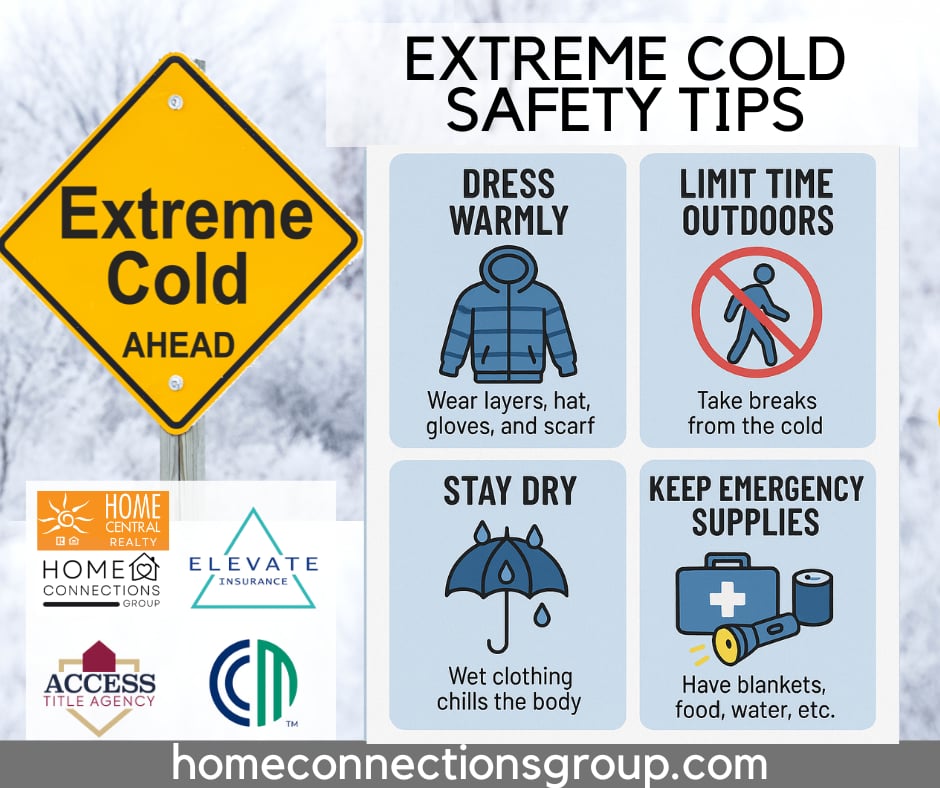
How to Stay Safe During Extreme Cold Temperatures
Home Connections Group January 26, 2026
Home Connections Group January 26, 2026
When Arctic air sweeps through, it’s not just uncomfortable—it can be life-threatening. Whether you're braving the outdoors or hunkering down at home, these tips will help you weather the chill safely.
Layer up: Wear loose-fitting layers to trap heat. Start with moisture-wicking base layers, add insulation (like fleece or wool), and finish with a windproof outer shell.
Cover extremities: Use hats, scarves, mittens (better than gloves), and thermal socks. Exposed skin is vulnerable to frostbite.
Stay dry: Wet clothing loses insulation fast. Change out of damp clothes immediately.
Set thermostats to at least 55°F, even if you're away.
Open cabinet doors under sinks to let warm air circulate around pipes.
Let faucets drip to prevent freezing—especially in colder areas of the house.
Avoid risky heating methods: Never use ovens or grills indoors. Use space heaters safely—plug directly into wall outlets and keep 3 feet clear of flammable items.
Avoid driving unless necessary. If you must go out:
Keep a full tank of gas.
Pack an emergency kit: blankets, flashlight, snacks, water, jumper cables, and a phone charger.
Drive slowly and increase following distance—roads may be icy even if they look clear.
Frostbite: Numbness, pale or grayish skin, waxy texture. Most common on fingers, toes, nose, and ears.
Hypothermia: Shivering, confusion, slurred speech, drowsiness. If body temperature drops below 95°F, seek medical help immediately.
Older adults, infants, and those without reliable heat are especially at risk. A quick call or visit could save a life.
Close off unused rooms to conserve heat.
Use battery-powered lights instead of candles.
Keep fridge and freezer closed to preserve food longer.
Never run generators indoors—carbon monoxide poisoning is deadly.
Extreme cold isn’t just a seasonal inconvenience—it’s a serious hazard. By dressing smart, preparing your home, and watching out for others, you can stay safe and warm until the thaw returns. For more local resources, check warming centers and emergency alerts in your area.


Real Estate


Real Estate
We are with you from the beginning of the process through your closing, providing full service and expertise every step of the way.

1156 DUBLIN ROAD, SUITE 105 COLUMBUS, OH 43215