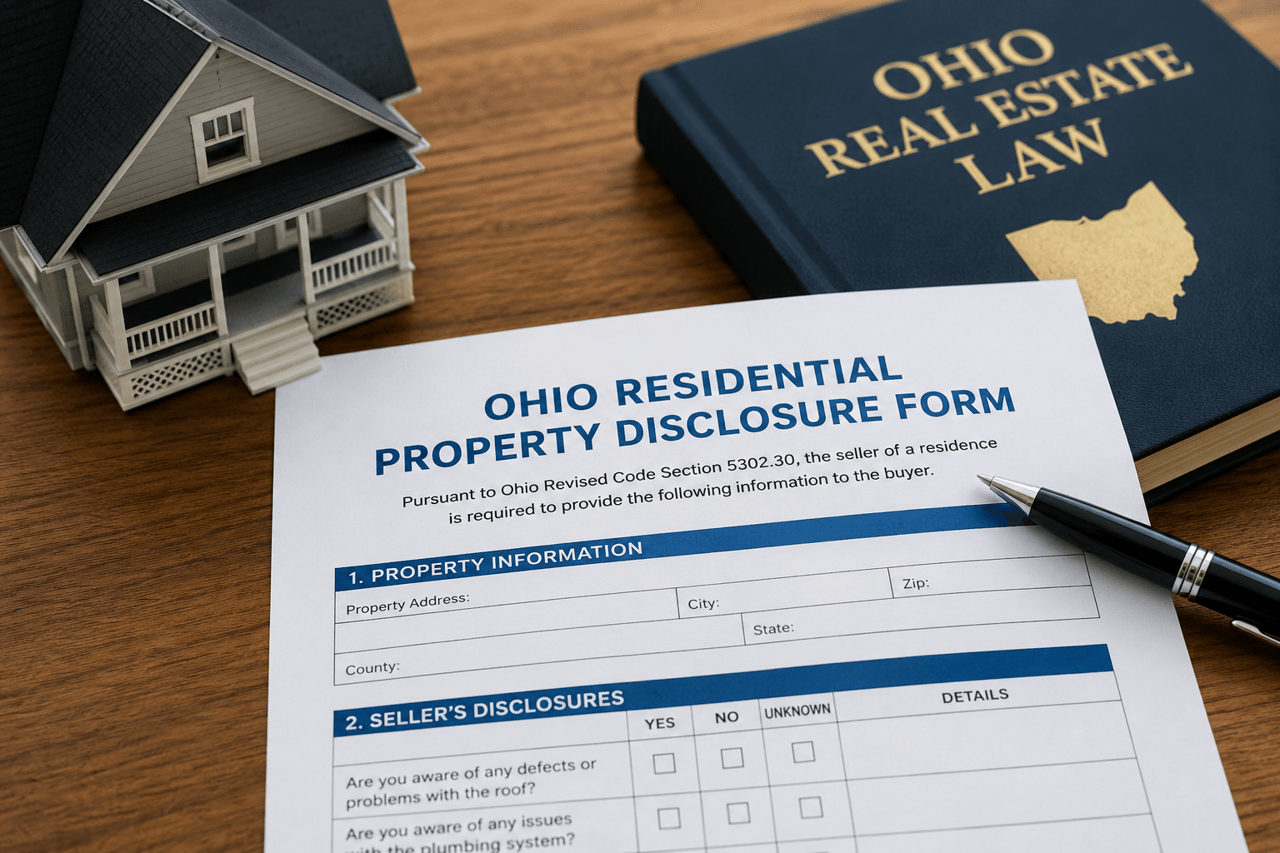
Ohio Property Disclosure Explained
Greg Waite July 24, 2026
Greg Waite July 24, 2026
In most Ohio home sales, sellers must complete an Ohio property disclosure form that explains known problems or conditions affecting the property. This may include issues with the roof, foundation, plumbing, electrical system, water intrusion, or environmental hazards.
The disclosure helps buyers understand the home’s condition before closing, ask better questions, and decide whether additional inspections or negotiations are needed. Sellers must complete the form honestly based on what they actually know about the property.
The Ohio residential property disclosure form is a document sellers use to report known conditions and material defects affecting a home.
Under Ohio Revised Code Section 5302.30, the form is generally required when transferring residential real estate containing one to four dwelling units.
The seller completes the Ohio property disclosure form based on their actual knowledge. It is not a guarantee that the property has no defects, and it does not replace a professional home inspection.
Sellers should answer each section accurately and in good faith. Buyers should review the entire form before continuing with the purchase.
Ohio home seller disclosure requirements cover many parts of a property. Sellers may need to report known problems involving:
Seller disclosures in Ohio are based on what the owner actually knows. Sellers are not usually expected to discover hidden problems, but they should not conceal, misrepresent, or leave out a known material issue.
A seller who knowingly fails to disclose a serious problem may face potential legal consequences. Buyers or sellers with legal concerns should speak with a qualified Ohio real estate attorney.
A property disclosure statement in Ohio gives buyers an early overview of the home’s reported condition. It can help them:
Buyers should pay attention to incomplete answers, repeated repairs, water damage, older systems, and explanations connected to “yes” responses.
The disclosure should also be compared with the results of an independent home inspection. The seller reports what they know, while an inspector evaluates the property’s visible and accessible components.
Yes. Some Ohio real estate transactions may be exempt from the standard residential property disclosure form.
Possible exceptions can include certain:
An inherited property is not automatically exempt simply because it came from an estate. Whether the disclosure is required depends on the facts of the transaction and Ohio law.
A knowledgeable real estate professional can help buyers and sellers identify whether additional guidance may be needed.
A real estate agent cannot provide legal advice, but they can help clients understand how the disclosure fits into the Ohio home buying process.
An agent can help buyers and sellers:
Home Connections Group helps buyers and sellers throughout Columbus, Central Ohio, and nearby communities understand the steps involved in an Ohio real estate transaction.
Whether you're buying or selling a home in Ohio, Home Connections Group can help you navigate every step of the transaction with confidence.




Real Estate
Safety Tips

Lifestyle
Scioto Grove Metro Park

Lifestyle
Two Metro Parks: Rocky Fork & Inniswood Gardens
We are with you from the beginning of the process through your closing, providing full service and expertise every step of the way.

1156 DUBLIN ROAD, SUITE 105 COLUMBUS, OH 43215